
Whether it’s the couch where your family gathers every night or an antique armchair you bought at a garage sale, upholstery collects dirt, allergens, oils, and stains over time. When it’s time to do a deep clean, you have two main options: dry cleaning and steam cleaning. Understanding the difference between dry and steam cleaning upholstery will help you make the right decision for your furniture.
This guide breaks down both cleaning methods so you can feel confident about scheduling professional upholstery cleaning.
What Is Dry Upholstery Cleaning?
Dry upholstery cleaning uses little to no moisture. Rather than saturating fabric with water, dry cleaning relies on specialized compounds, powders, or low-moisture cleaning solution formulas to lift dirt and grime from fibers.
How the Dry Upholstery Cleaning Process Works
The dry cleaning process typically involves applying a dry compound or cleaning agents directly to the upholstery surface. A machine or hand tool then works the compound into the fabric, where it binds to soil and debris. Once the compound has done its job, a professional extracts or vacuums it away, taking the dirt with it.
Some methods of dry cleaning also use solvents to clean more stubborn stains. Dry cleaners use these solvents carefully, as certain dry cleaning chemicals can be harsh on delicate fabrics if misapplied.
When Dry Cleaning Makes Sense
The dry cleaning method works well for:
- Delicate or moisture-sensitive fabrics that could shrink or warp
- Furniture that needs to be back in use quickly
- Spot clean situations where only a small area needs attention
- Fabric types that manufacturers specify as dry-clean only
Unlike steam cleaning, dry cleaning is generally lower-risk for fabrics that cannot tolerate water. If you have a furniture item that has a “dry clean only” care tag, this cleaning method is likely your safest option.

What Is Steam Upholstery Cleaning?
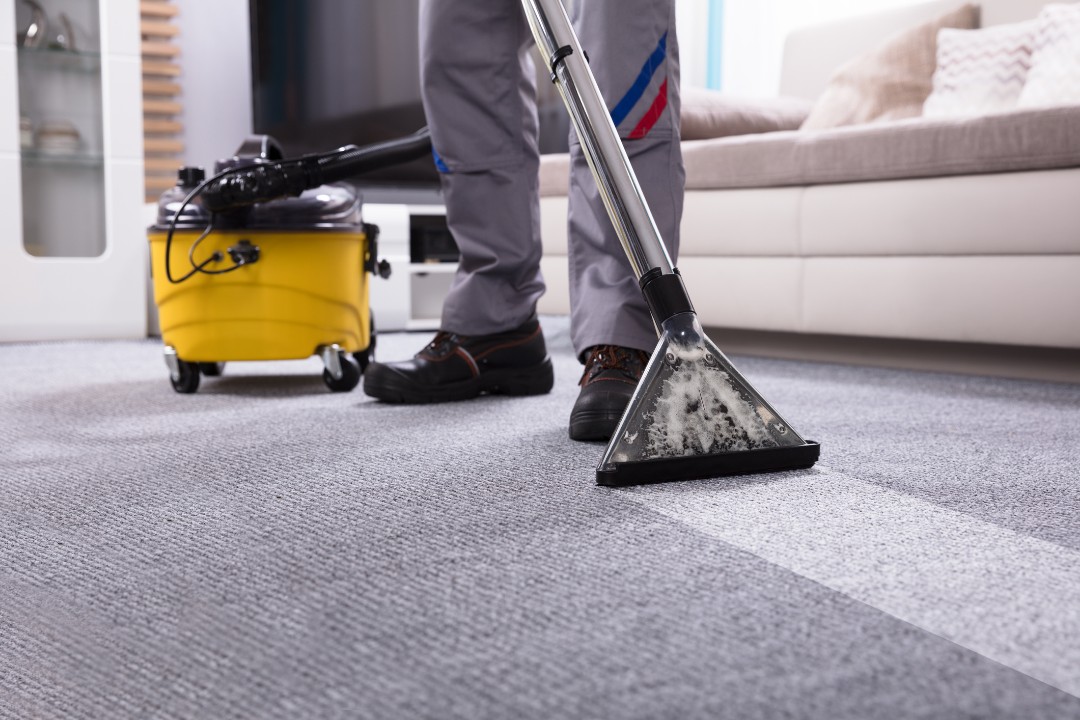
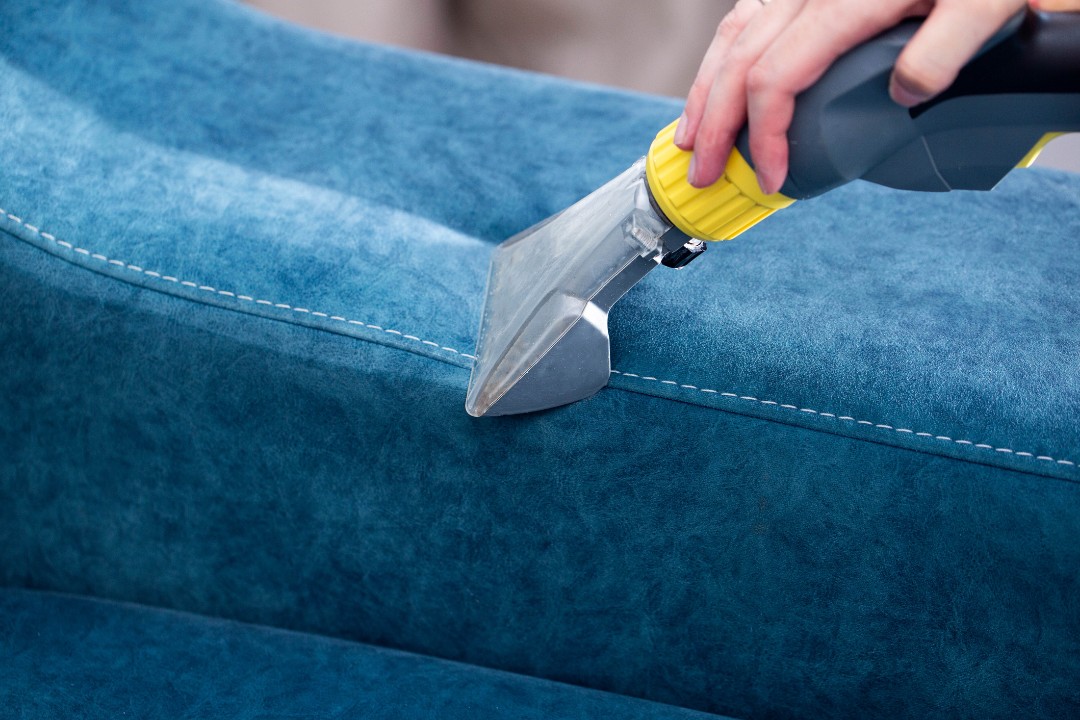
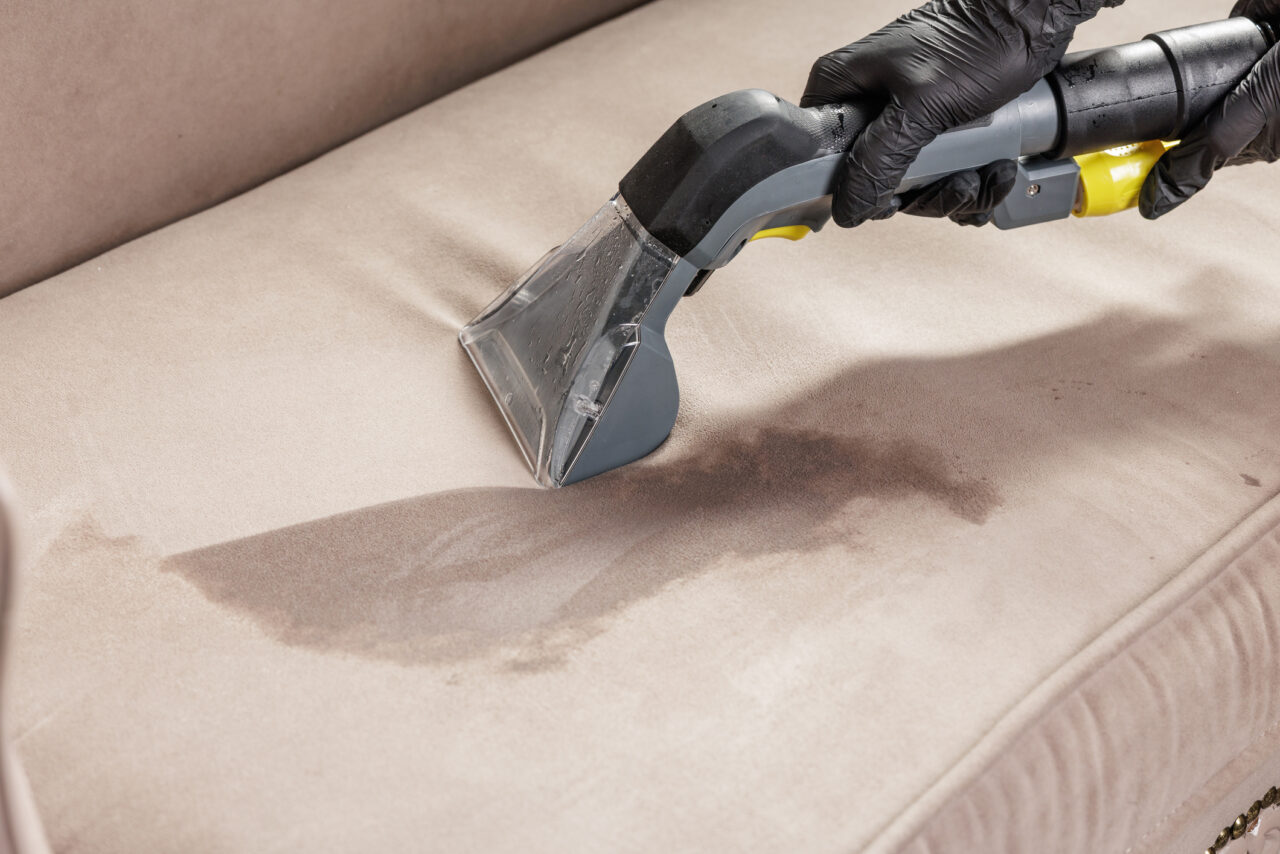
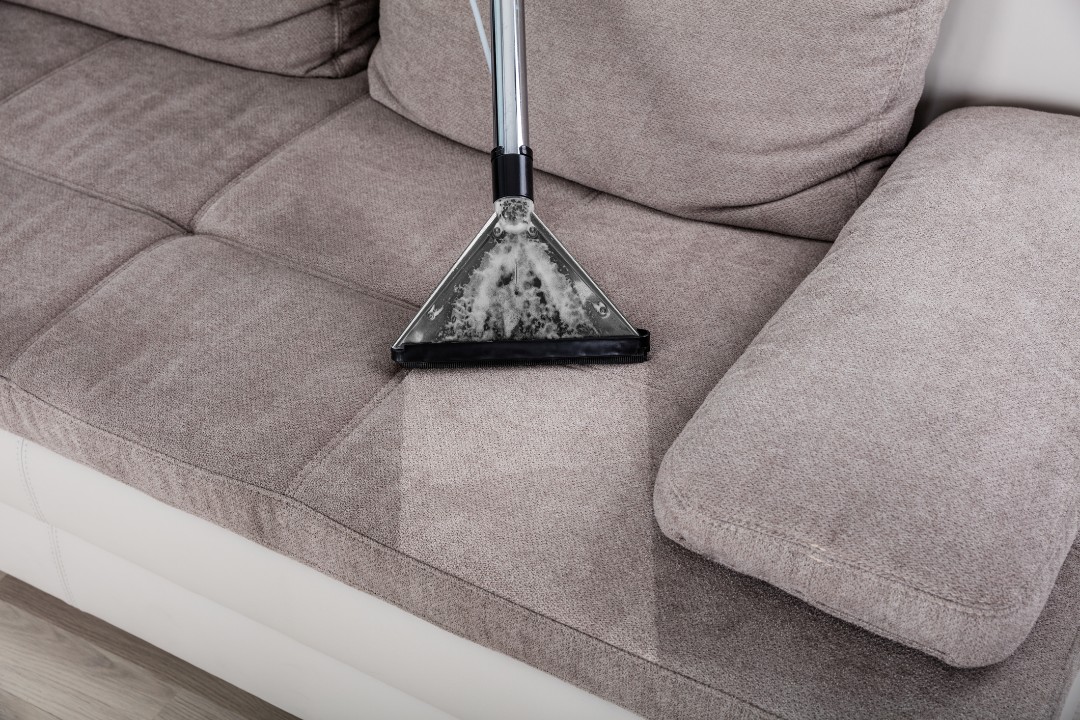
Steam cleaning uses hot water extraction to pull deep-seated dirt, allergens, and bacteria from fabric fibers. A steam cleaner pushes hot water and cleaning solution into the upholstery, then uses powerful extraction to pull it back out along with everything it loosened.
How Steam Cleaning Works
Steam cleaning uses hot water that is heated to high temperatures and delivered through a cleaning wand or nozzle. The heat and moisture work together to break down oils, stains, and biological matter embedded in carpet fibers and upholstery fabric. The extraction process then removes the dirty water, leaving the fabric cleaner at a deeper level than surface treatments can reach.
Professional steam cleaner equipment generates significantly more heat and suction than anything available for consumer use, which is partially why professional steam cleaning delivers results that are difficult to replicate on your own.
The Benefits of Steam Upholstery Cleaning
Steam cleaning offers several meaningful advantages:
- Deeper cleaning: Hot water extraction reaches into fabric layers that dry cleaning methods cannot always penetrate.
- Kills bacteria and allergens: The heat used in steam cleaning kills dust mites, mold spores, and other allergens found in upholstery.
- No harsh chemicals required: Many steam cleaning services rely primarily on heat and water rather than chemical solvents.
- Effective on a wide range of stains: Steam cleaning is one of the most effective cleaning methods for breaking down tough, set-in stains.

What Is Chem-Dry Upholstery Cleaning?
Chem-Dry is a cleaning method that sits between traditional dry cleaning and steam cleaning. It’s one of the more recognized names in the professional carpet and upholstery cleaning industry, and understanding how it works will help you evaluate it against other options.
How Chem-Dry Works
Comparing chem-dry vs. traditional steam cleaning comes down to moisture levels. Chem-dry uses a carbonated cleaning solution applied in low volumes, relying on the effervescent action of the solution to lift dirt and grime to the surface rather than saturating the fabric. This process uses significantly less water than hot water extraction, which means upholstery dries faster than it would after a conventional steam clean.
The cleaning solution used in Chem-Dry is marketed as a green cleaning option, with the brand promoting a natural cleaner formula as part of its appeal. The carbonation in the solution does much of the heavy lifting, breaking down soils so they can be extracted without soaking the fabric.
Chem-Dry vs. Steam Cleaning: Key Differences
Homeowners looking for a safer upholstery cleaning option than dry cleaning should compare Chem-Dry vs. steam cleaning. Here’s how they stack up:
- Moisture: Chem-Dry uses far less water, reducing dry time and the risk of issues like mold or mildew
- Heat: Unlike steam cleaning, which uses hot water and high heat as primary cleaning agents, Chem-Dry relies on its carbonated cleaning solution
- Extraction: Both methods use extraction, but hot water extraction in steam cleaning typically achieves a deeper clean due to the combination of heat and pressure
- Chemical use: Chem-Dry promotes its formula as avoiding harsh chemicals, making it a draw for households with children or pets
Is Chem-Dry a Good Option for Upholstery?
Chem-Dry can be a solid choice for upholstery that needs a refresh without the longer dry time associated with steam cleaning. It offers a middle ground for homeowners who want more than a dry compound treatment but are cautious about applying heavy moisture to their furniture. For deep cleaning of heavily soiled upholstery, however, professional steam cleaning generally delivers stronger results through the power of hot water extraction and heat.
Dry vs. Steam Cleaning Upholstery
When looking at the effectiveness of dry vs. steam cleaning upholstery, the right answer depends on your goal.
Surface Cleaning vs. Deep Cleaning
Dry cleaning works well for routine maintenance and for fabrics that are not heavily soiled. It removes surface-level dirt and grime without introducing moisture risk. Steam cleaning, by contrast, delivers a deeper clean that is better suited to furniture that has accumulated layers of soil, pet dander, or allergens over time.
If your goal is a thorough, deep clean that refreshes upholstery from the inside out, steam cleaning is generally the more effective choice.
Drying Time
One practical difference between dry and steam cleaning upholstery is drying time. A dry cleaning method leaves fabric ready to use almost immediately, while steam cleaning requires hours to dry, depending on the fabric thickness, airflow in your home, and how much moisture was used during the process. Professional equipment minimizes this by using powerful extraction, but some drying time is still expected.
Stain Removal
For removing stains, steam cleaning typically outperforms dry methods. The combination of heat and extraction loosens and removes staining compounds that a dry compound may not fully address. For delicate fabrics where steam isn’t appropriate, targeted dry cleaning chemicals can help, but results may vary based on stain type.
Steam Cleaning Upholstery: Safety Considerations
The safest method for steam cleaning your upholstery comes down to the fabric material. Most upholstery materials, including polyester, nylon, and cotton blends, handle steam cleaning well. But use caution when cleaning the following fabrics:
- Silk and rayon, which can shrink or distort with heat and moisture
- Velvet, which can mat or flatten
- Fabrics marked “X” or “S,” which should avoid water-based cleaning methods
A professional upholstery cleaning team will inspect your furniture before recommending a cleaning method, so you don’t have to guess.
Pros and Cons of Dry and Steam Cleaning Upholstery
Dry Cleaning Method: Pros and Cons
Pros:
- Fast drying time
- Safe for delicate or moisture-sensitive fabrics
- Lower risk of retaining moisture
- Good for light maintenance cleaning
Con:
- Less effective for deep cleaning
- Dry cleaning chemicals can be harsh on certain materials
- May not remove allergens or bacteria as effectively
Steam Cleaning Method: Advantages and Limitations
Steam cleaning advantages:
- Delivers a deeper clean than dry cleaning
- Kills allergens, bacteria, and dust mites
- Doesn’t require harsh chemicals
- Best for heavily soiled upholstery and carpet
Limitations:
- Requires longer dry time
- Not well suited for all fabric types
- Requires professional equipment for best results
Dry Cleaning Upholstery at Home: What You Should Know
Dry cleaning upholstery at home is possible with store-bought kits and dry compound products, but results are limited. Consumer-grade products do not have the same cleaning solution strength or extraction capability as professional equipment. If you use dry cleaning at home, follow product instructions carefully and always test on an inconspicuous area first.
For effective upholstery cleaning, professional cleaning services provide a level of clean that consumer products simply can’t match. If you’re searching for quality upholstery cleaning, professional results come from professional tools and products.
Is Steam Cleaning Better for Upholstery?
For most households, steam cleaning is the better long-term investment for furniture that is used regularly. The health benefit alone, removing allergens and bacteria through heat and extraction, makes professional steam cleaning worth considering. An eco-friendly and safe carpet cleaning service will target what lives inside your furniture, not just what sits on the surface.
That said, steam cleaning is not a one-size-fits-all solution. Some furniture pieces call for dry cleaning methods based on fabric type or manufacturer guidelines. During a consultation, an experienced carpet cleaning professional will recommend the approach best suited to your upholstery.
If you’re trying to decide whether to hire a professional upholstery cleaning company for steam cleaning or to use a dry cleaning method, consider the age of the furniture, the fabric type, the level of soiling, and whether anyone in your home has allergies or sensitivities.
How Often Should You Clean Your Upholstery?
A general guideline for active households is to schedule professional upholstery cleaning every 12 to 18 months. Homes with pets, children, or individuals with allergies may benefit from cleaning more frequently. It’s important to spot clean spills as soon as possible to prevent stains from setting, and to vacuum regularly to keep surface debris from going deeper into the fabric.
For guidance on keeping your upholstery clean between professional visits, check out the Revive Home Services blog.
Steam Cleaning and Dry Cleaning: Which Is Right for Your Upholstery?
Choosing between steam cleaning or dry cleaning for upholstery comes down to a few key questions:
- What type of fabric does your furniture have?
- How soiled is the furniture?
- Does anyone in your home have allergies or respiratory sensitivities?
- How quickly do you need the furniture back in use?
For most households needing professional upholstery cleaning, steam cleaning is a more thorough and eco-friendly option. Traditional steam cleaning and hot water extraction remain the gold standard in the professional upholstery cleaning industry simply because they work. Dry cleaning is the best option for delicate items and quick turnaround, but it’s not a substitute for the deep clean that steam delivers.

Why Choose Revive Home Services for Professional Upholstery Cleaning in the Twin Cities
When you need professional upholstery cleaning, Revive Home Services is here to help. Our team utilizes industry-leading tools and products for every job to help keep your furniture fresh. We take the guesswork out of upholstery cleaning by assessing your specific needs and using the method that gets the best results for your home.
Contact Revive Home Services today to schedule your next professional upholstery cleaning and see the difference that trained, local professionals can deliver.