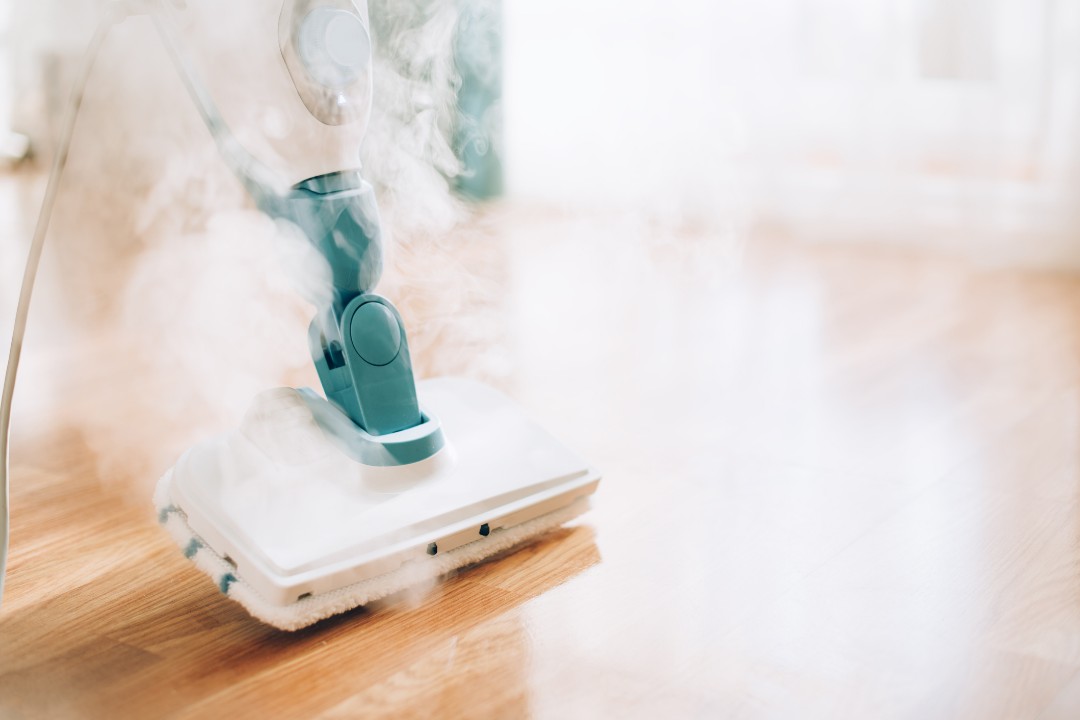

Laminate flooring gives homeowners the look of hardwood without the higher price tag, but it comes with its own set of care requirements. One question we hear often at Revive Home Services is whether steam mops are safe for laminate flooring. The short answer is no, and the reasons why matter if you want your floor to last.
This guide breaks down what happens if you steam mop laminate flooring, why steam mops ruin laminate floors over time, and what a safe cleaning method looks like. We'll also cover the most common mistakes homeowners make and how a damp mop, the right cleaning products, and occasional professional care can keep your laminate floor looking its best for years.
Are Steam Mops Safe for Laminate Flooring?
Steam mops have become popular cleaning tools because they promise a deep clean without chemicals. They work by heating water into steam and releasing it onto the floor through a mop head. For tile or sealed concrete, this can be an effective cleaning method. For laminate flooring, it's a different story.
Laminate planks are made of layered fiberboard topped with a printed design layer and a protective wear layer. Unlike solid hardwood or waterproof vinyl flooring, laminate isn't designed to withstand prolonged exposure to heat and moisture. When you use a steam mop on laminate, the combination of heat and water vapor can penetrate the seams between planks and reach the fiberboard core underneath.
Should You Steam Clean Laminate Floors?
Most flooring manufacturers explicitly advise against using steam cleaners on laminate. If you check your warranty documentation, there's a good chance you'll find a clause that excludes damage caused by steam mops or excess moisture. Using one anyway could void your flooring warranty, leaving you to cover repair or replacement costs out of pocket.
It's also worth noting that "laminate" and "waterproof" are not the same thing. Some newer laminate products are marketed as water-resistant, meaning they can handle the occasional spill if cleaned up quickly. But water-resistant is not the same as waterproof, and even water-resistant laminate flooring may not hold up to direct steam exposure or standing water.
Can Steam Mops Damage Laminate Floors Long-Term?
Yes, and the damage often isn't visible right away. Steam mops introduce moisture in a form that's easy for laminate to absorb, especially at the seams. Over weeks and months of regular use, that moisture buildup can lead to a range of issues that are difficult and expensive to fix.
What Happens If You Steam Mop Laminate Flooring?
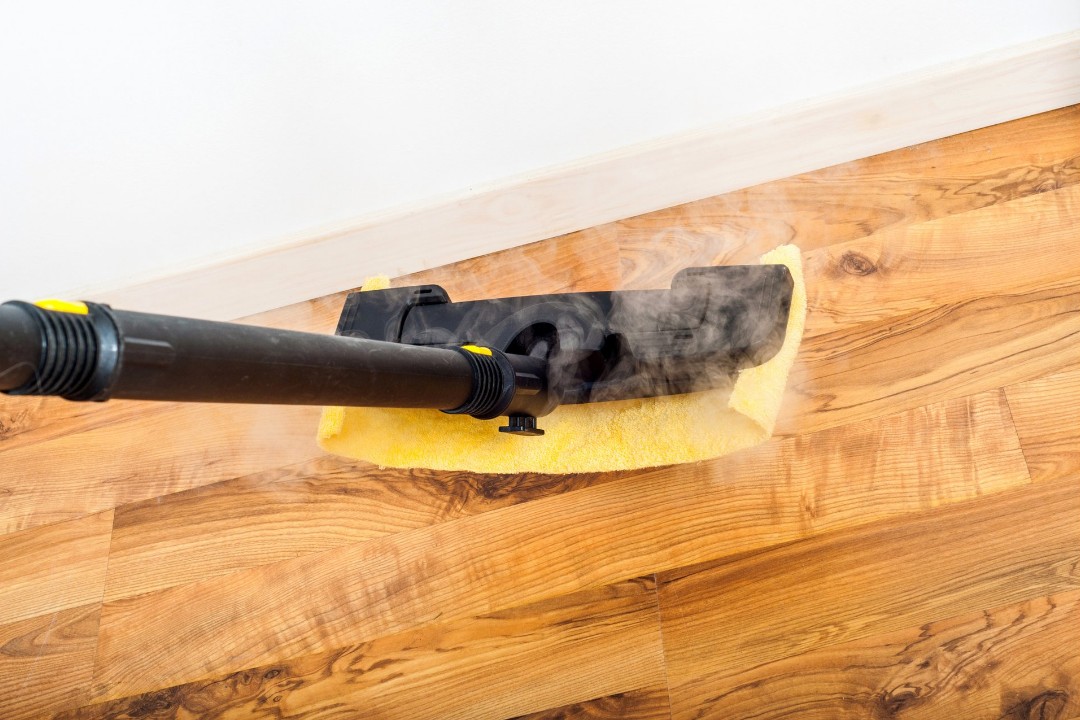
Understanding the specific ways steam can damage your laminate floor helps explain why this cleaning method is best avoided altogether.
Warping and Plank Separation
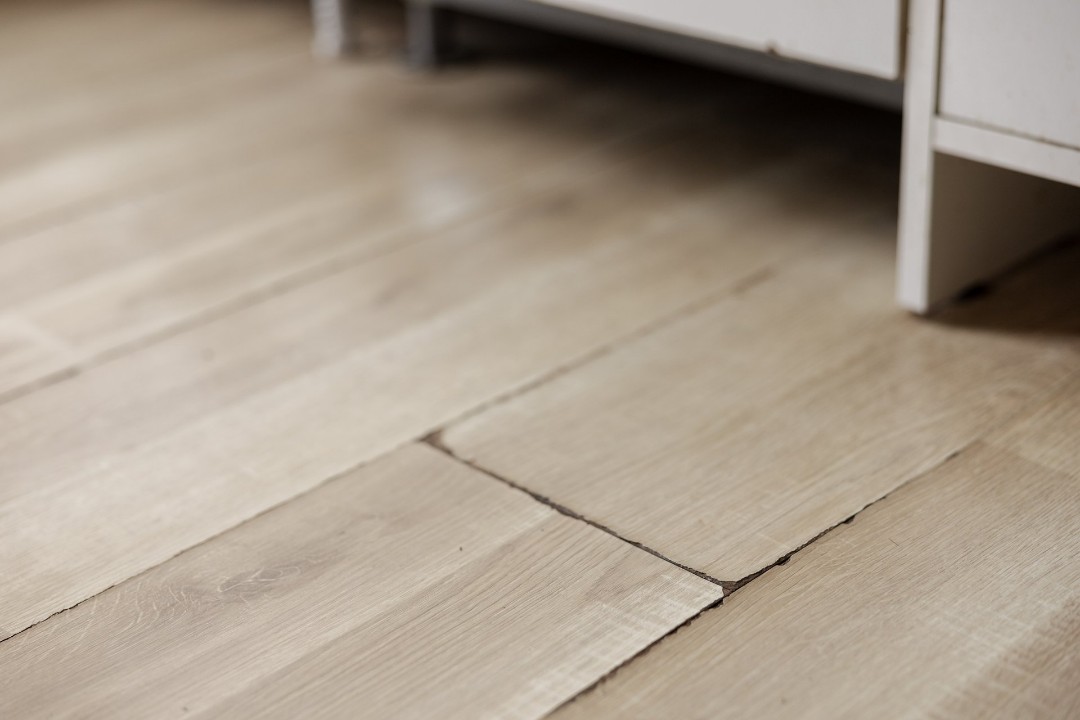
Laminate planks are built from compressed fiberboard, a material that reacts to moisture much like a sponge. When steam seeps into the seams between planks, the fiberboard core absorbs the moisture and begins to swell. As the material expands and then dries unevenly, the planks can warp, buckle, or lift at the edges.
Seam separation is one of the most common signs of moisture damage. Once a gap forms between planks, it becomes an even easier entry point for future spills, dust, and debris, accelerating the cycle of damage.
Swelling and Buckling
Swelling doesn't always happen evenly across a room. Areas near doorways, kitchens, or spots where steam mopping is repeated most often tend to show the most pronounced buckling. Once fiberboard swells, it generally doesn't return to its original shape, even after the moisture dries out. This is one of the reasons steam damage is considered largely irreversible.
If you've noticed your laminate floor in areas like the kitchen or entryway feels less stable underfoot or has visible ridges, our article discussing common hardwood floor cleaning mistakes to avoid covers many of the same moisture-related issues that affect laminate and hardwood alike.
Trapped Moisture Beneath the Surface
One of the trickiest problems with steam cleaning laminate is that damage can happen out of sight. Moisture that seeps through the seams can become trapped between the laminate planks and the subfloor. Without proper airflow, this trapped moisture has nowhere to go.
Over time, trapped moisture can lead to a musty smell, a soft or spongy feel underfoot, and in more severe cases, mold growth beneath the flooring. By the time these signs are noticeable, the damage has often already spread beyond a single plank.
Finish Deterioration and Cloudy Appearance
The top layer of laminate flooring is a clear wear layer designed to protect the printed pattern beneath it and give the floor its shine. Heat and water from steam mops can break down this protective top layer over time, leading to a cloudy, dull, or hazy appearance.
Once the finish starts to deteriorate, the floor becomes more vulnerable to scratches, staining, and further moisture absorption. A laminate floor that once looked like real wood can quickly start to look worn and tired, even if it's just a few years old.
How Steam Mops Ruin Laminate Floors: The Core Issue
At the heart of all these problems is a simple mismatch between the cleaning tool and the flooring material. Steam mops are designed for hard, non-porous surfaces like ceramic tile or sealed stone, where heat and moisture have nowhere to go but evaporate off the surface.
Laminate flooring, by contrast, has seams, an absorbent fiberboard core, and a finish that's sensitive to heat and moisture. Using a steam mop on laminate essentially forces water and heat into a material that's designed to resist it under normal conditions, but not under direct, repeated exposure.
This is why so many flooring manufacturers list steam cleaners among the cleaning tools to avoid, right alongside excessive water, harsh chemicals, and abrasive scrub pads.
Common Laminate Floor Cleaning Mistakes
Knowing what not to do is half the equation. Let's look at the habits that tend to cause the most damage.
Using a Steam Mop for a "Deep Clean"
It's easy to see why a steam mop feels like the answer when laminate floors start to look dull or sticky with residue. The reality is that what looks like a deep clean in the moment can set up long-term damage. Instead of reaching for steam, regular sweeping or vacuuming with a soft-bristle brush attachment removes the dust, dirt, and debris that cause that buildup in the first place.
Wet Mopping with Excess Water
A traditional wet mop loaded with water is another common culprit. When a mop is soaked and excess water is left to pool on the surface, that water can seep into the seams just like steam does, leading to the same warping and swelling issues described above.
The safer approach is a damp mop, meaning the mop head is only lightly moistened and any standing water is wiped up immediately. If you've ever wondered why your floor looks cloudy after mopping, our article discussing the best ways to clean hardwood floors in open spaces walks through techniques that translate well to laminate, since both floor types are sensitive to excessive moisture.
Using Harsh Chemicals or the Wrong Cleaning Solution
Not every cleaning solution labeled for "all floor types" is actually appropriate for laminate. Harsh chemicals, ammonia-based cleaners, and abrasive DIY cleaners can strip away the protective top layer, leaving the floor more vulnerable to scratches and moisture absorption.
A simple vinegar and water solution, used sparingly and applied to a cloth rather than poured directly onto the floor, is a gentler option many homeowners turn to. That said, it's also important to use products recommended by your flooring manufacturer, since formulations vary between different floor types.
Letting Spills Sit
When spills happen, how quickly you respond makes a big difference. Liquid left on laminate flooring can seep into the seams within minutes, especially in high-traffic areas like kitchens and entryways. Wiping up spills with a cloth or paper towel as soon as they happen is one of the simplest ways to prevent long-term damage.
Safe Laminate Floor Cleaning Practices
Regular Sweeping and Vacuuming
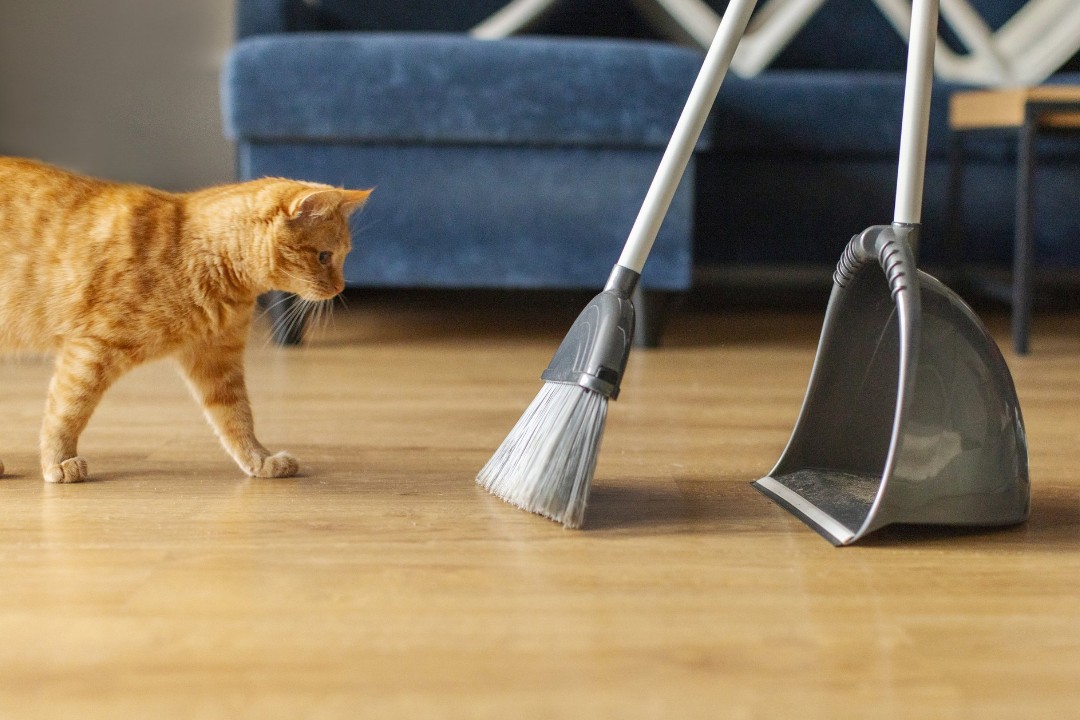
Regular cleaning doesn't need to involve water at all. Sweeping or vacuuming on a consistent schedule, especially in high-traffic areas, removes the dirt and debris that would otherwise need a deeper clean later. A vacuum with a hard floor setting and no beater bar is ideal, since it won't scratch the surface.
Damp Mopping with the Right Cleaner
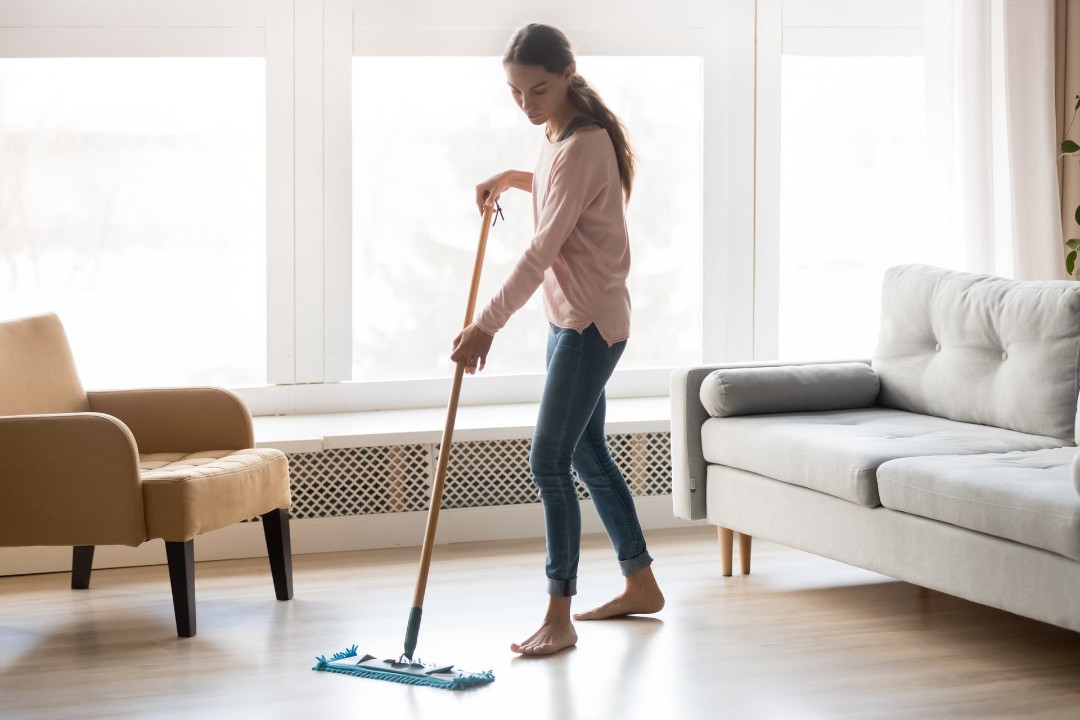
When your laminate floor needs more than sweeping, a damp mop paired with a cleaning solution made specifically for laminate or hard floors is the appropriate cleaning method. Wring the mop out thoroughly so it's just barely damp, and always follow up by drying the floor with a clean, dry cloth.
Seasonal Maintenance
Cleaning needs can shift throughout the year, particularly when winter brings in salt, slush, and extra moisture on shoes and boots. Our article titled "Winter floor care: essential tips to protect and maintain your floors during winter" covers strategies for keeping laminate and hardwood floors protected when moisture exposure tends to spike.
How to Choose the Right Cleaning Method for Laminate Flooring
Choosing the right cleaning approach comes down to understanding what your specific laminate floor can and can't handle. Always check the care guidelines from your flooring manufacturer first, since cleaning recommendations vary between different floor types, including hardwood, laminate, and vinyl flooring.
As a general guideline:
- A soft-bristle broom or vacuum should be your go-to for regular cleaning.
- A lightly damp mop with a laminate-appropriate cleaner works well for occasional deeper cleaning.
- Spills should be addressed immediately with a cloth or paper towel.
- Steam mops, soaking wet mops, and harsh chemical cleaners are best avoided entirely.
Following these guidelines helps ensure your laminate flooring stays scratch-resistant, keeps its protective top layer intact, and maintains the durability that made it an appealing flooring choice in the first place.
When Professional Floor Cleaning Makes the Difference
Even with careful day-to-day habits, laminate floors benefit from occasional professional attention. At Revive Home Services, our team understands the cleaning methods, products, and techniques that work with your specific floor type rather than against it. We know which cleaning solutions are safe, how to address residue buildup without introducing excess moisture, and how to spot early signs of seam separation or finish wear before they become bigger problems.
Professional floor cleaning isn't about replacing your regular sweeping and damp mopping routine. It's about providing the kind of deep clean that addresses buildup in high-traffic areas, restores some of the floor's original appearance, and gives you a trained eye checking for potential damage you might not notice on your own.
If your laminate floors are looking dull, feeling less stable in certain spots, or just due for a refresh, our team can help you find a cleaning method that fits your floor type and your home. While our focus areas include hardwood floor refinishing, the same care principles apply across laminate, vinyl flooring, and other hard surfaces throughout your home.
How to Keep Your Laminate Floors Looking Their Best
Your floors are one of the biggest visual investments in your home, and the way you clean them either protects that investment or slowly works against it. Skipping the steam mop, sticking to regular sweeping and vacuuming, and using a damp mop with the right cleaning products will go a long way toward keeping your laminate flooring in great shape for years.
When you're ready for a deeper clean or just want a professional opinion on the condition of your floors, Revive Home Services is here to help. We bring the right tools, the right cleaning solutions, and the experience to treat your laminate, hardwood, and tile flooring with the care it deserves.
Ready to give your floors some attention? Schedule your service with Revive Home Services today and let our team take care of the rest.